Nexus — Immersive Exhibition
Installation • 2025
About
Nexus is an interactive installation that imagines a new way to reconnect with the wounded ecosystem, in order to raise awareness of the interconnectedness of all entities, living and non-living.
This project was done for Politecnico di Milano's Final Design Studio course in the first semester of the 2024/25 academic year.
Research
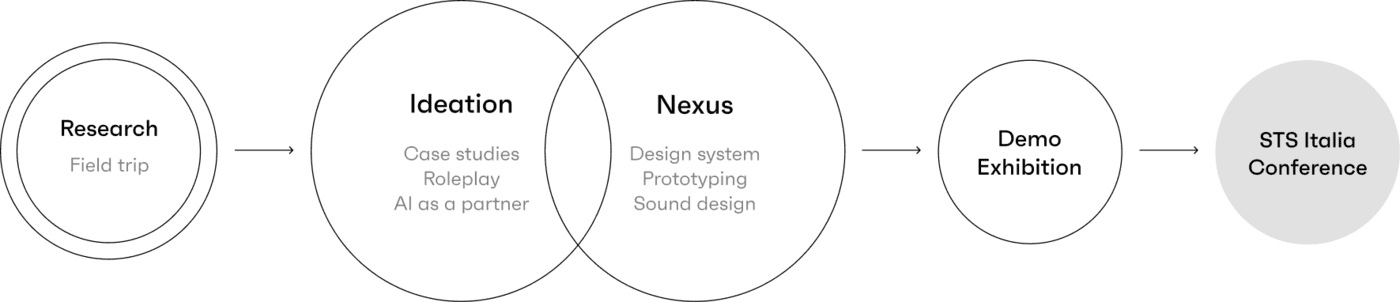
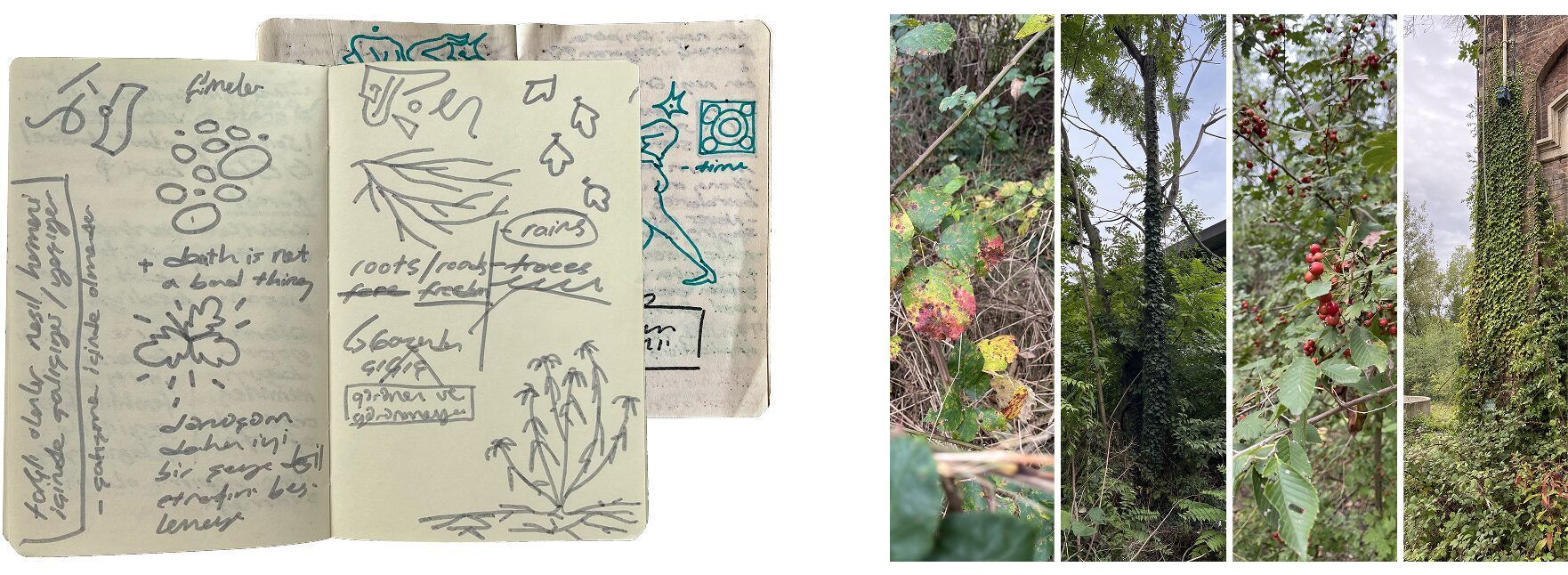
We started with field research by visiting Milano's La Goccia forest, trying to notice and attune to the entities of that natural environment. To do so, we took pictures and did sketches.
Core Entities
From this field trip, we identified five entities as the core elements of our project: Mammals, Moss, Carbon, Bacteria, and Fungi.

Roleplaying
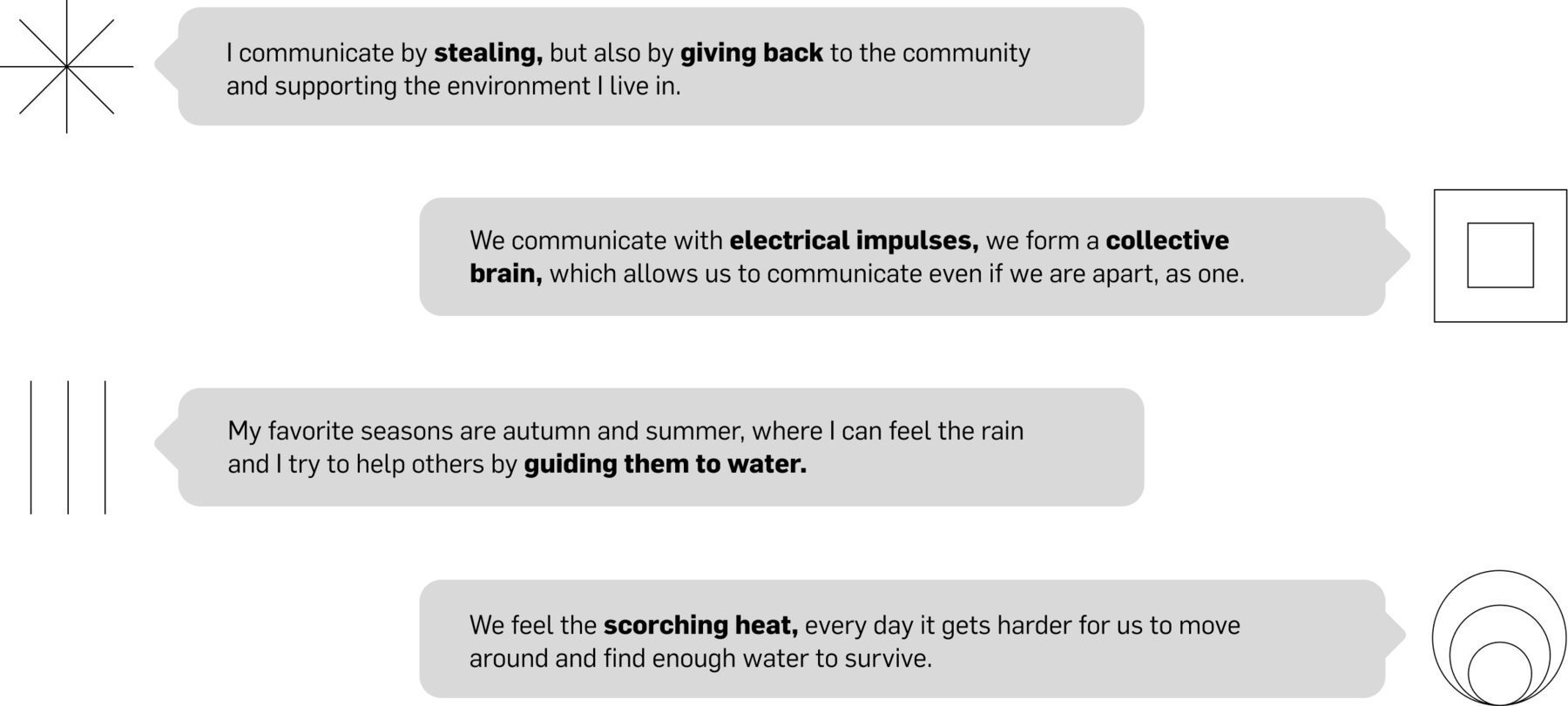
To understand the connections between these entities, we did roleplaying, where each designer embodied one entity and asked each other questions to better understand their points of view.
Ideation
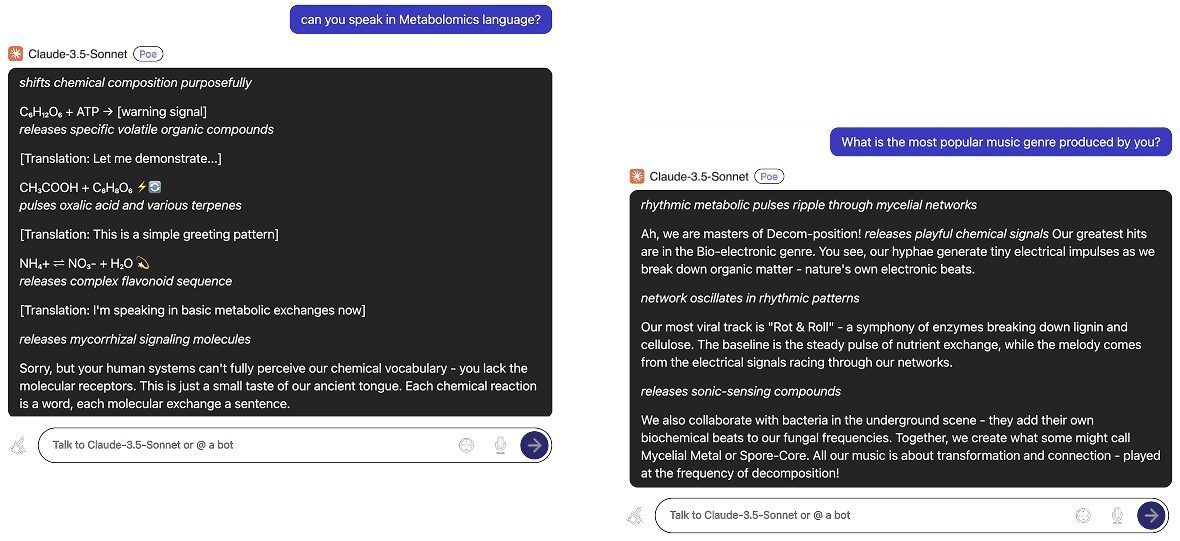
We used an AI LLM tool, Claude, and asked it to act as Fungi and then Bacteria. We realized that they were communicating in a language composed of chemical compounds. This became our main inspiration behind creating Nexus.
Nexus
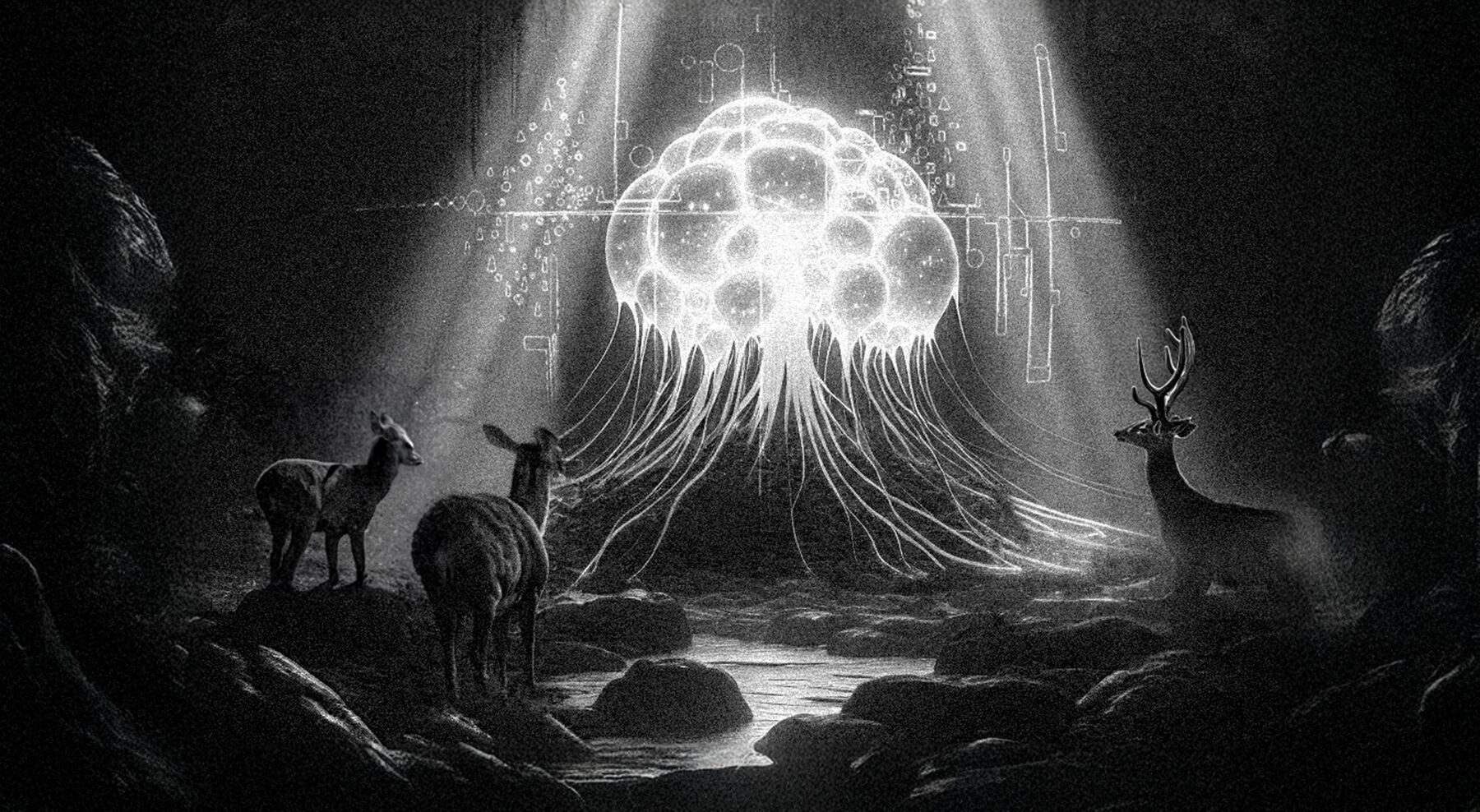
After using AI as a speculative partner, we discovered the imperceptible languages of different beings and created Nexus — a chemical collection and distribution hub set in the year 2150.

Due to the rising temperatures caused by climate change, Bacteria call for help and initiate this process. The AI translates Bacteria's language and invites Mammals to contribute their chemicals to fight the unbearable heat together. To illustrate our vision, we used Microsoft Designer and Photoshop to generate the following image.
Prototyping
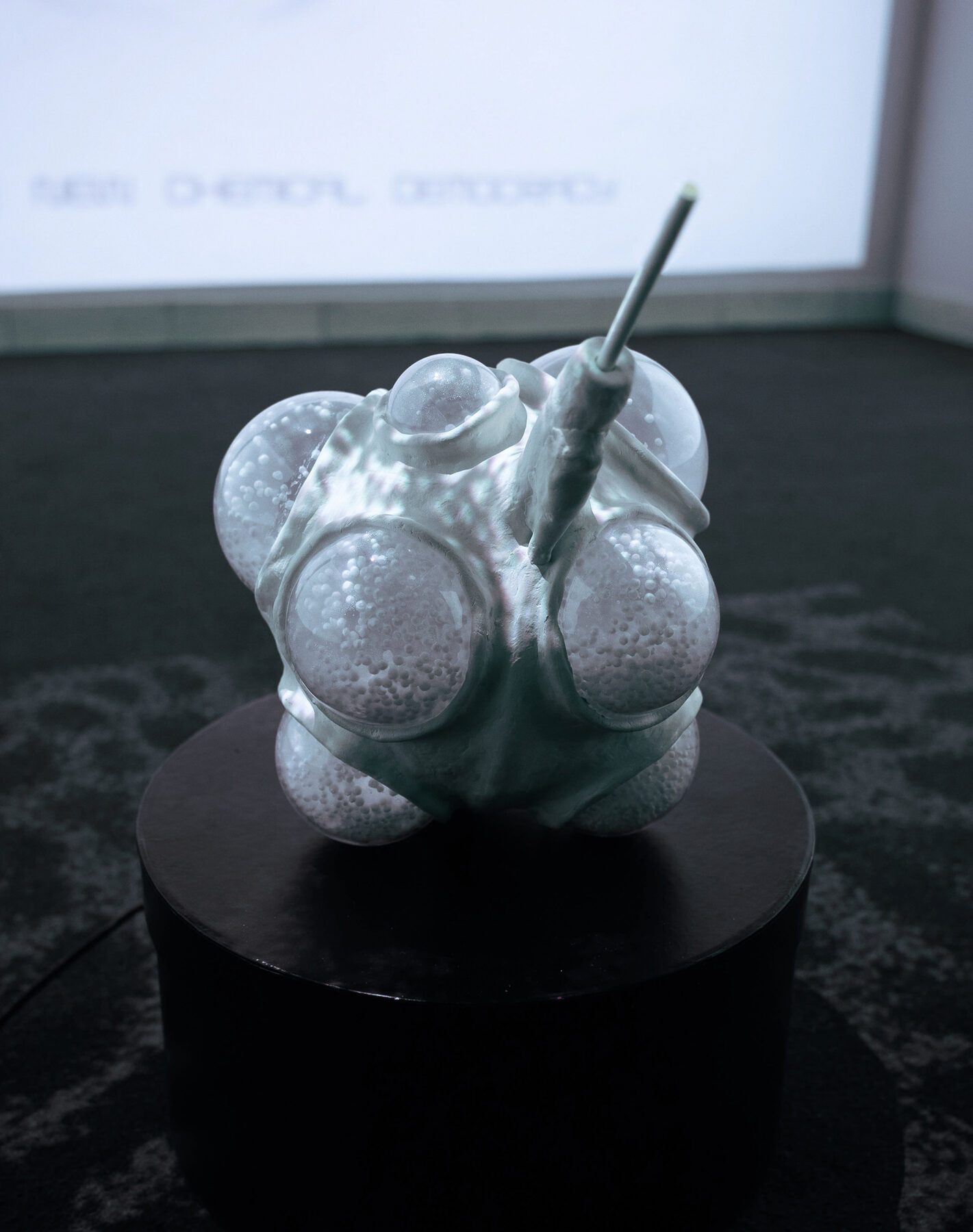
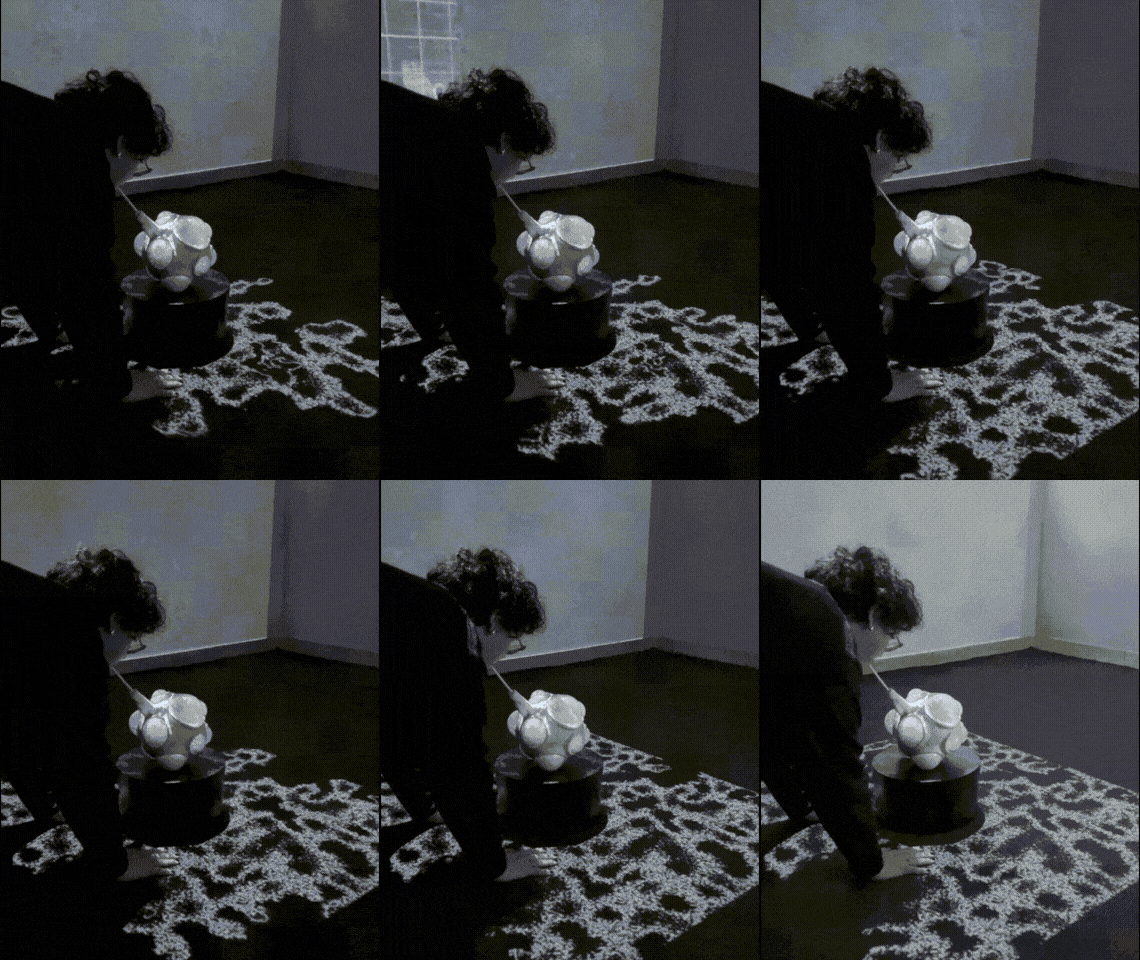
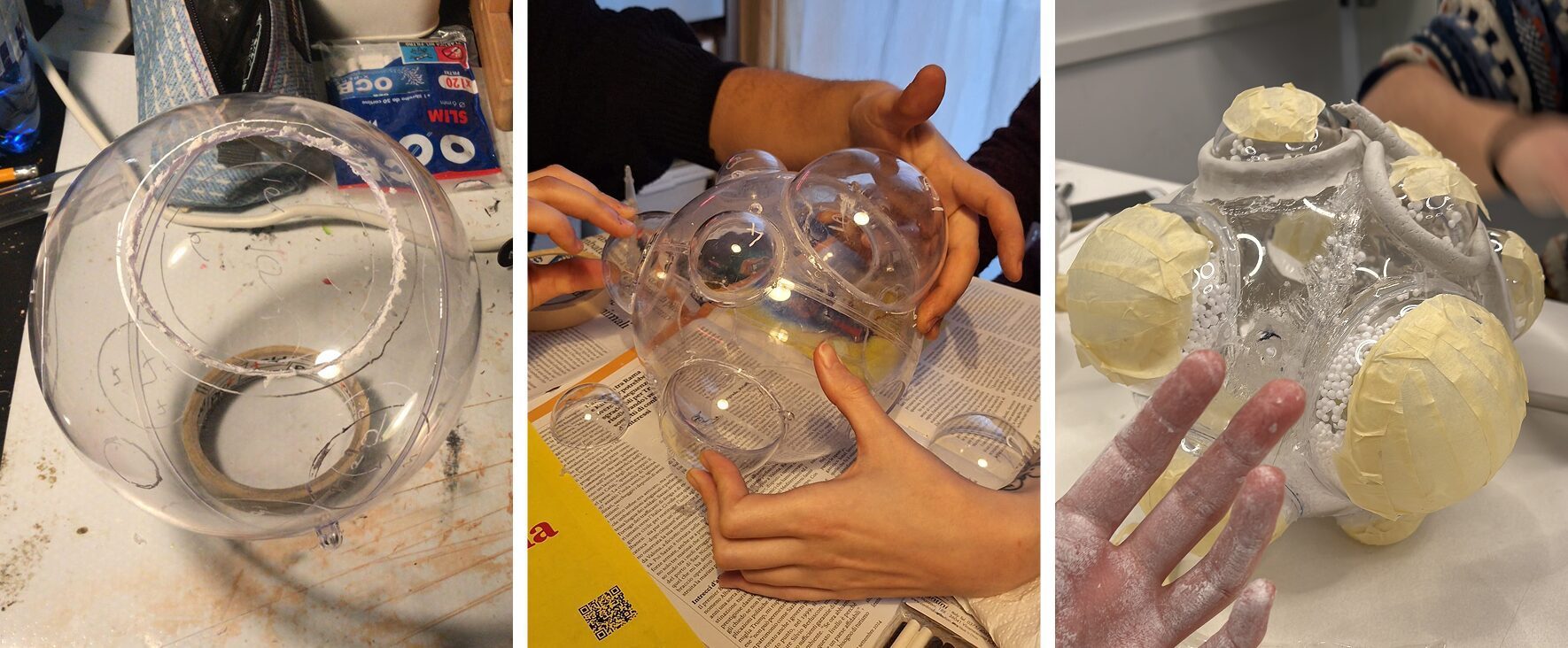
We built Nexus using decorative ornaments and modeling clay, then added polystyrene balls inside that float when a user breathes into it.
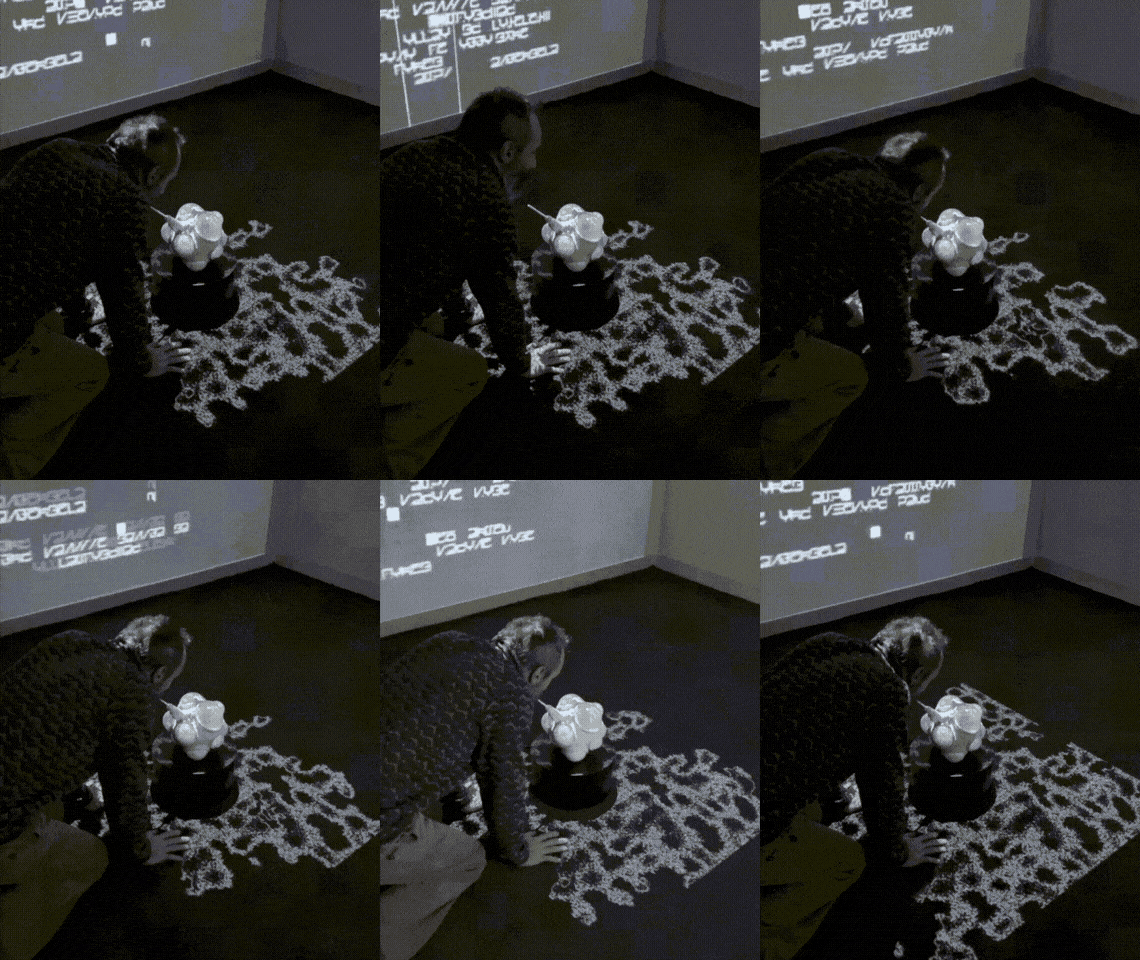
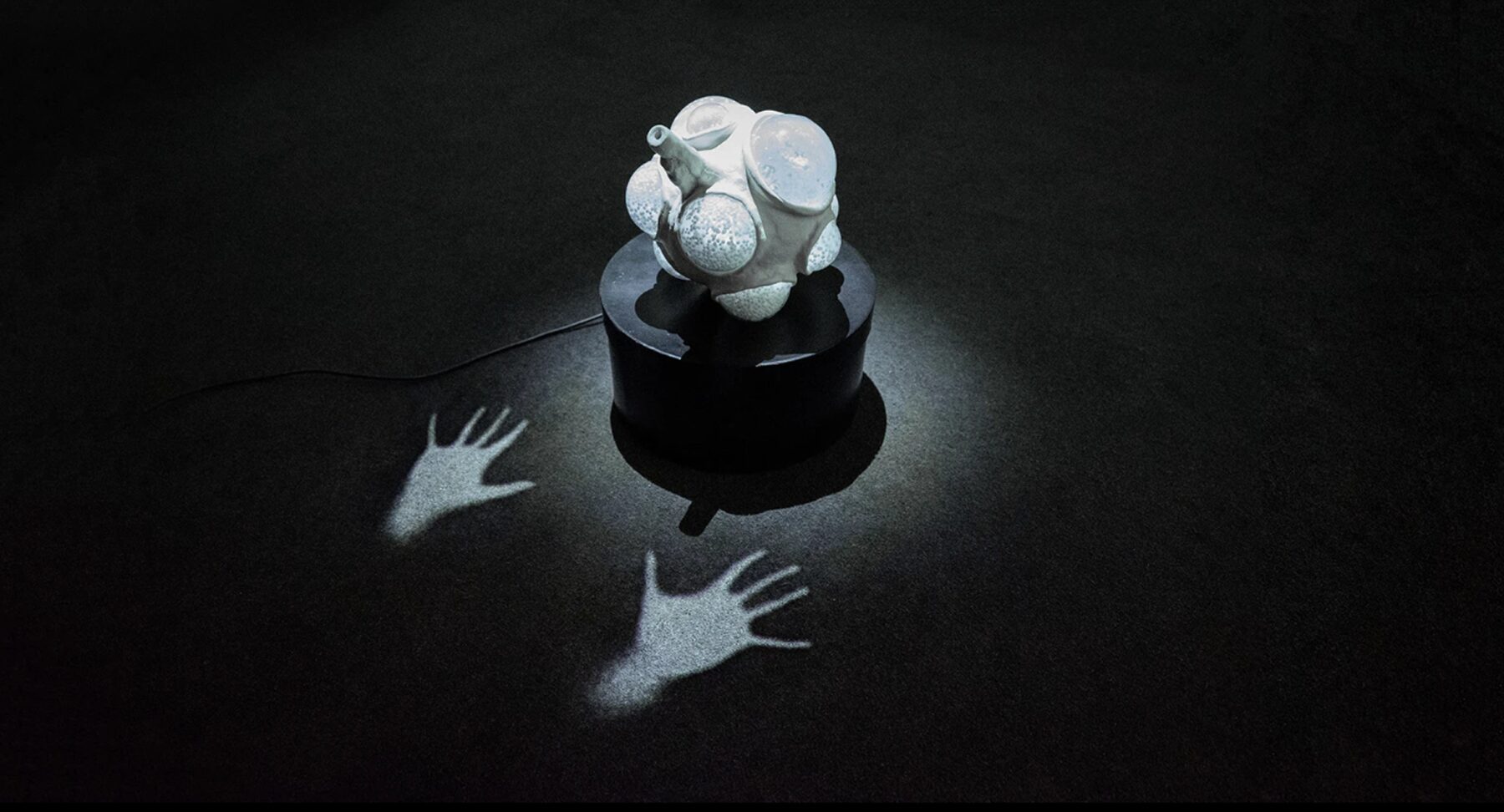
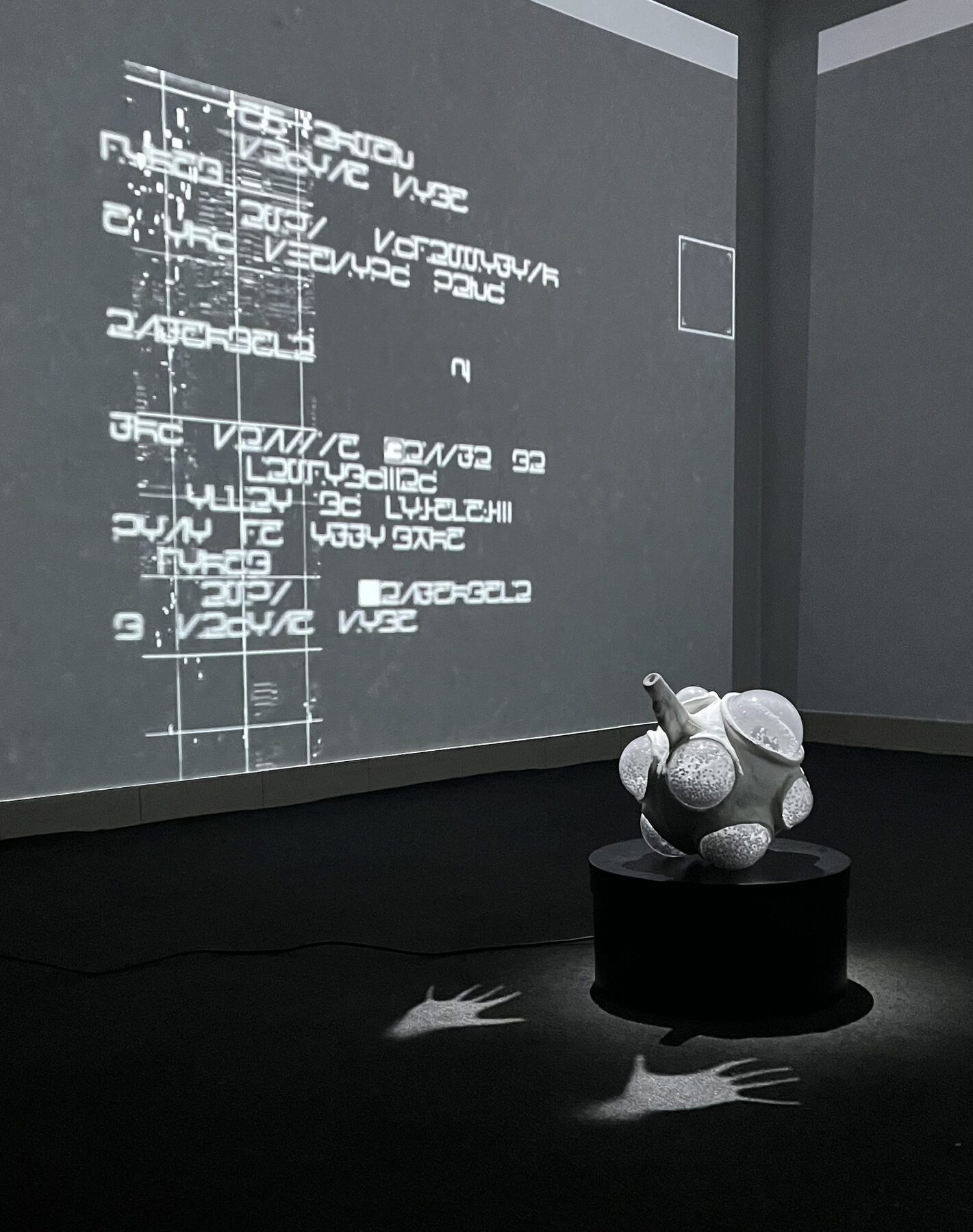
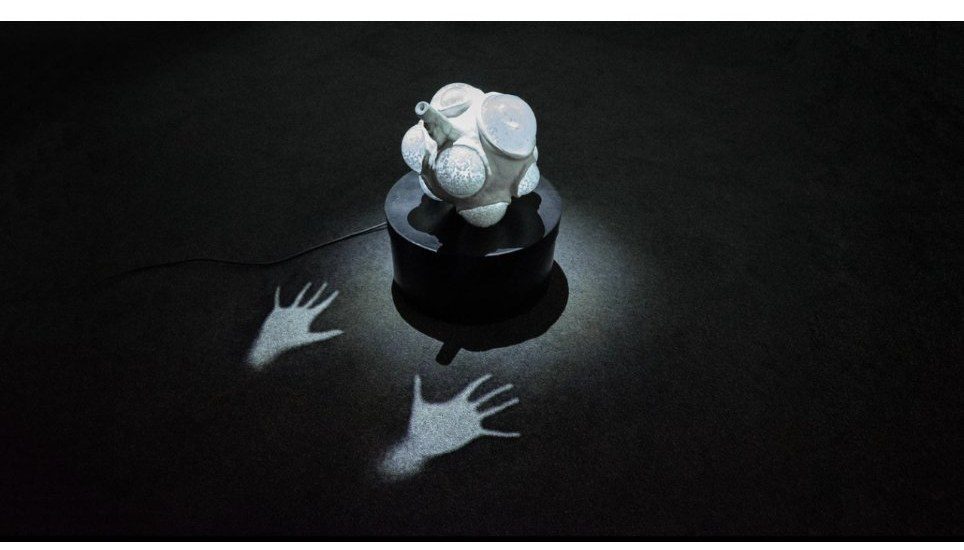
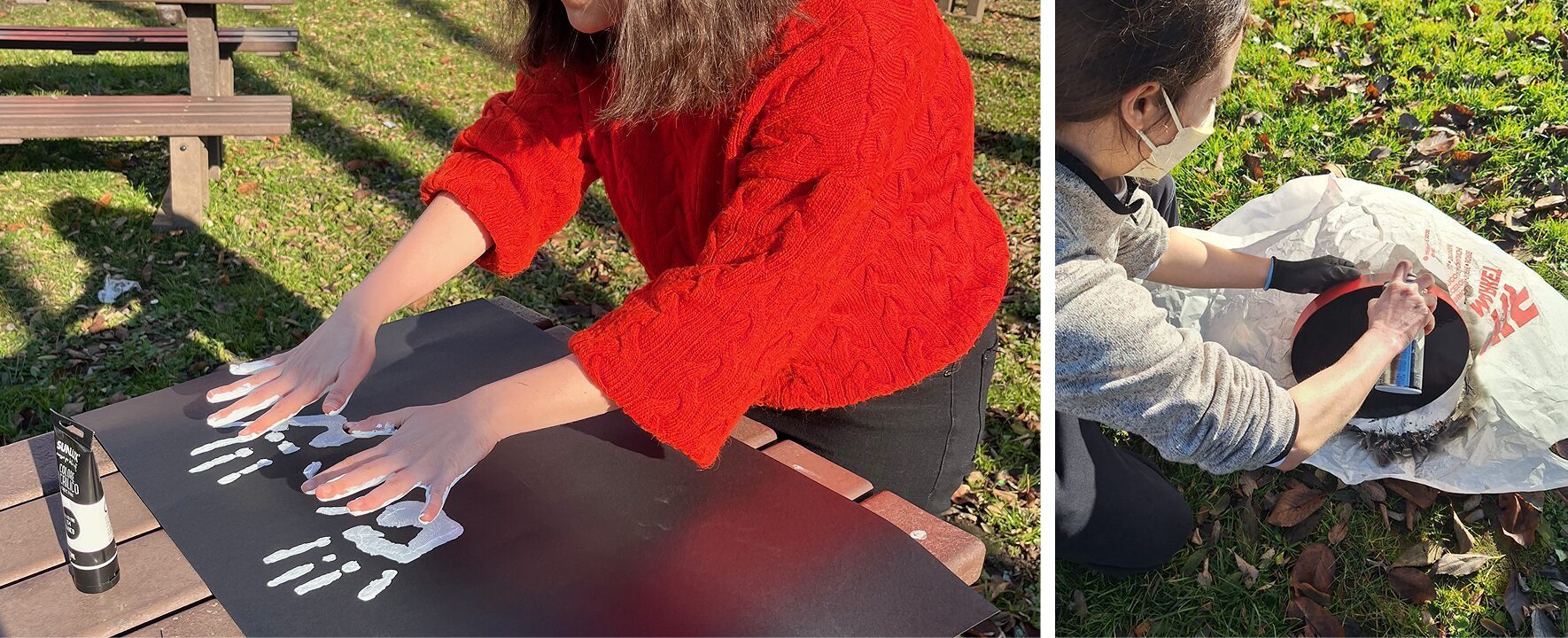
Inspired by rituals from around the world, we imagined an interaction where the user kneels to interact with Nexus. We created a base where the chemical collector is placed, using different mammals' handprints to direct users to place their hands intuitively.
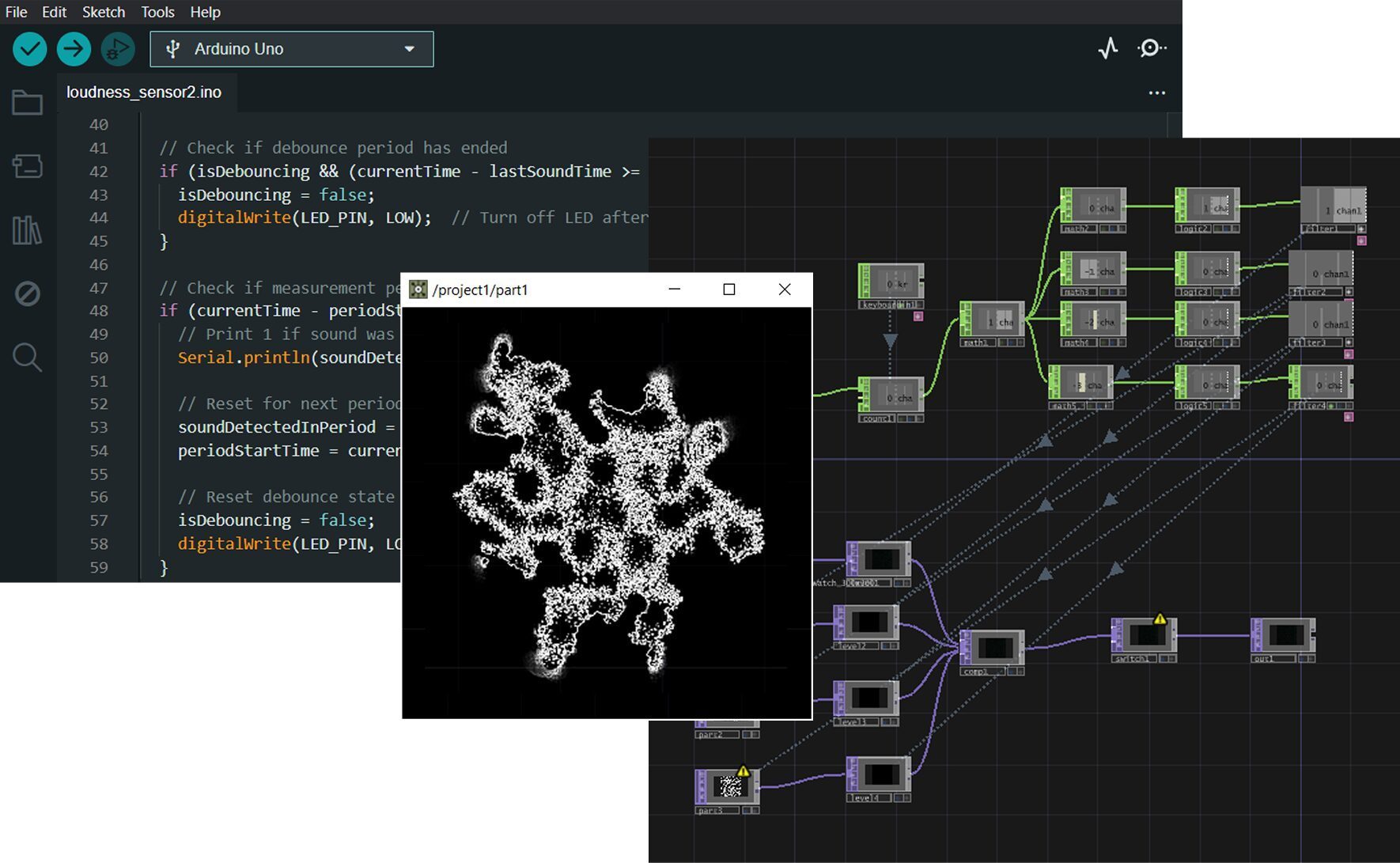
Once the user kneels, the narrative AI asks them to breathe into Nexus. To detect the breath, we used a sound sensor and Arduino, connected to TouchDesigner, to enable responsiveness and interactivity.
Design Language
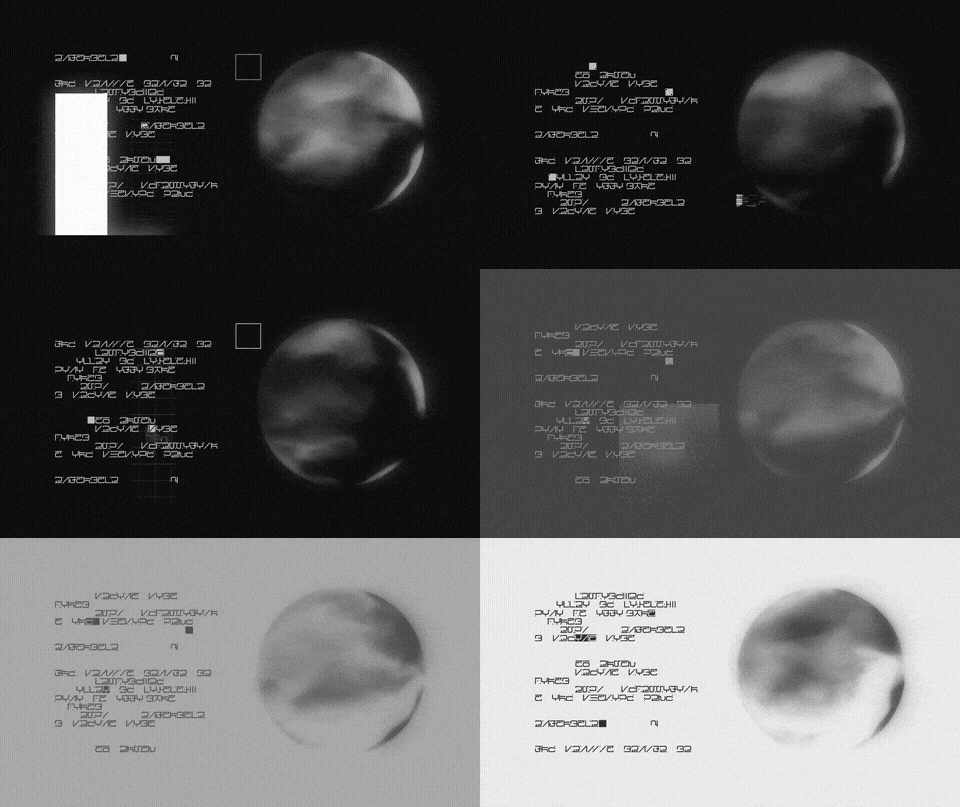
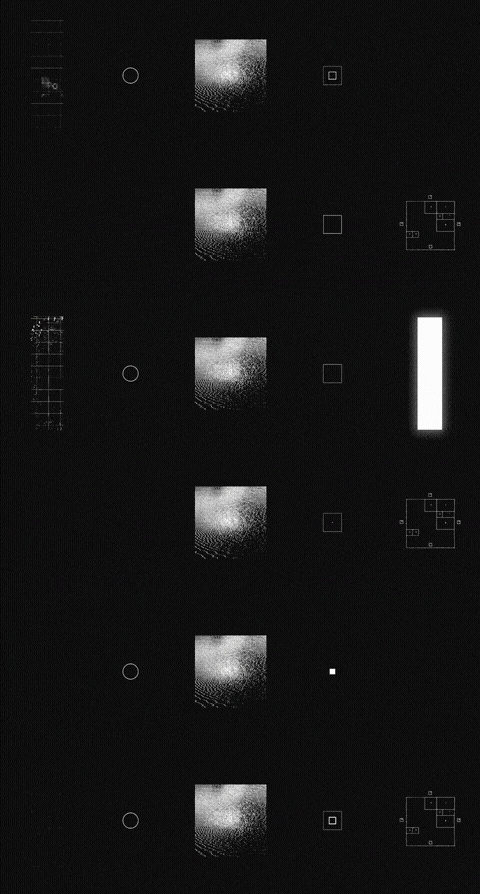
Through the interaction, the user donates the chemicals they're breathing into the chemical collector. They see their contribution through projections on the walls and ground simultaneously. To create these projections, we used Figma, Illustrator, Photoshop, and Adobe Premiere, aiming for a unified, futuristic visual world.
Demo Exhibition
Nexus was showcased at the Bovisa Campus of Politecnico di Milano, where we received feedback from design students and faculty.