Synchribble — Visualizing digital carbon footprint to increase awareness
Speculative Design • 2025
The Problem
While physical actions like throwing away plastic have a visible environmental impact, digital activities leave no immediate trace in our surroundings.
The Solution
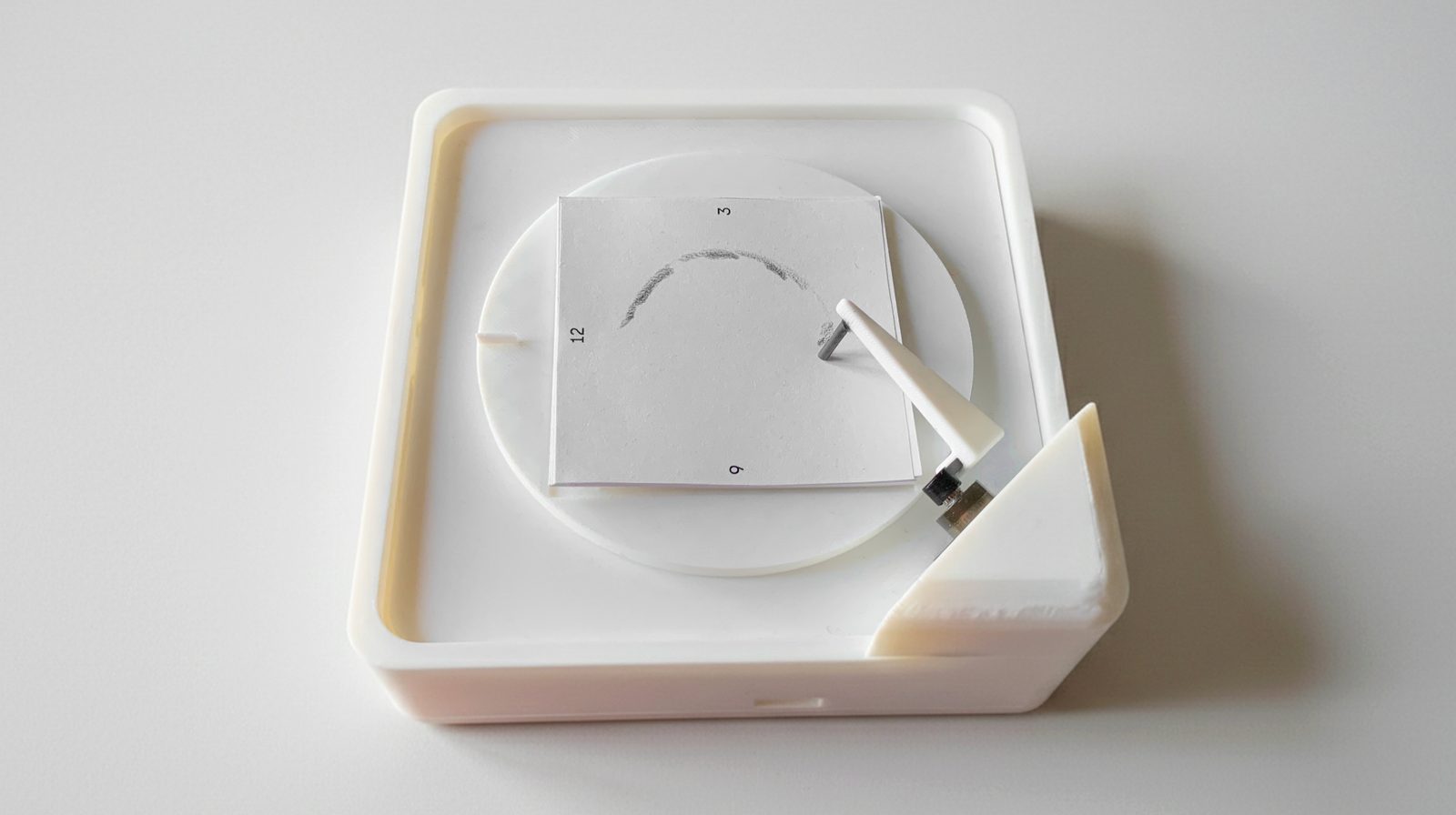
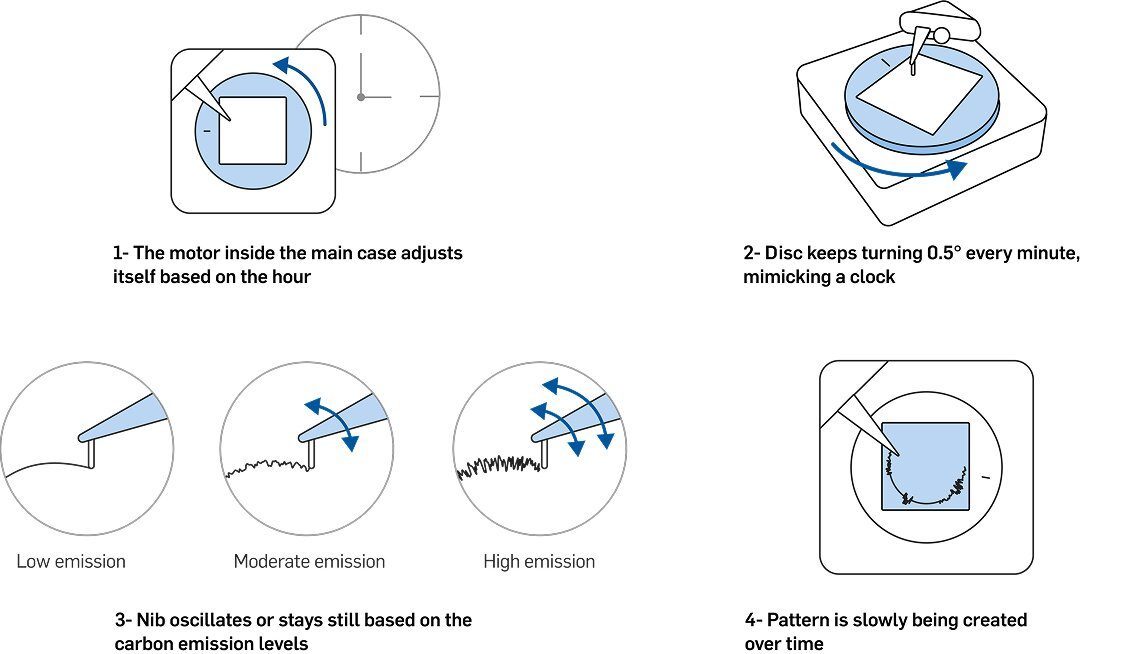
Synchribble materializes the invisible carbon footprint of digital activities. This speculative device translates real-time data into physical marks it scribbles on a daily clock log. As emissions rise, patterns grow darker and more intense.
Shadowing
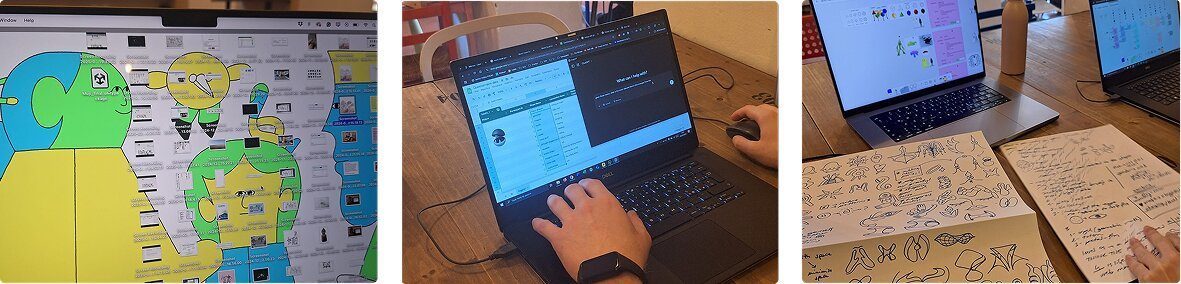
8 participants (3 pairs and 2 individuals) were recruited through snowball sampling to understand the unconscious energy habits and digital activities performed. Three main topics were identified: hidden energy consumption, generative AI usage, and analog tool integration.
Hidden Energy Consumption: Participants were not aware of their wasteful consumption of energy, for example, leaving chargers plugged into sockets after devices were fully charged or allowing laptops to remain fully on and bright during long breaks or discussions.
AI Usage: Generative AI tools (like ChatGPT, Claude, etc.) were integral to the process for ideation, content generation, writing, even designing logos.
Analog Tool Integration: Designers routinely used digital tools with analog methods (pen and paper) for note-taking and sketching, providing inspiration for Synchribble's physical output.
Semi-Structured Interviews
5 participants were recruited using convenience sampling. Participants struggled with digital sustainability because tech's environmental impact feels invisible, and seeing colleagues not caring reduces personal accountability.
"Instead of researching that part of it, they use it (ChatGPT), with the thought that everyone is doing it, I can too."
"Because you don't see it (the impact) directly."
"For example, the real world is more tangible... So you will see it, but for technology it's just it's there, something is happening, but I don't know what."
Design
For the shape, existing tabletop objects, like table lamps and tape dispensers were examined to gather inspiration. Various ways to convey feedback, such as growth, and amorphization of the object were explored. It was decided to proceed with drawing concept based on the results of preliminary research.

Low Fidelity Prototype
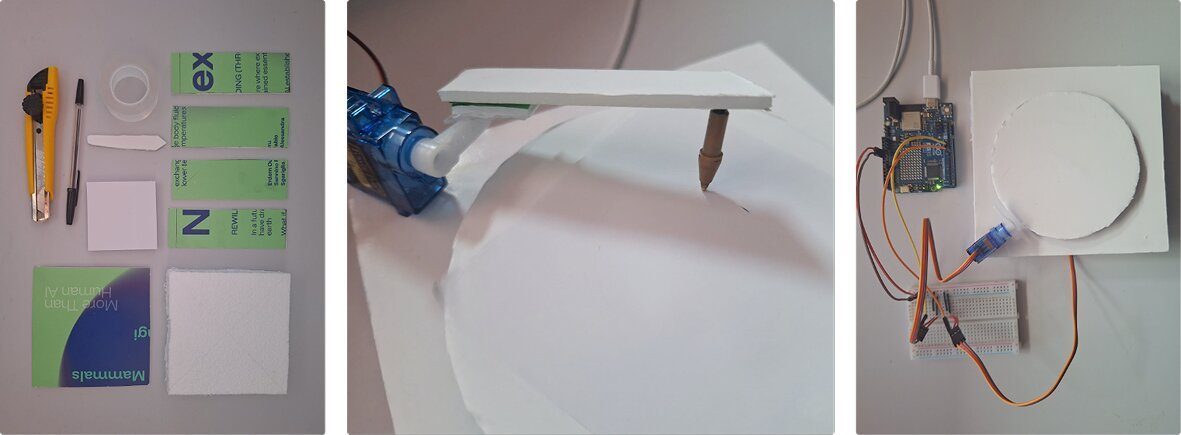
It was created using upcycled scrap materials to determine the dimensions and reduce material waste in prototyping.
High Fidelity Prototype
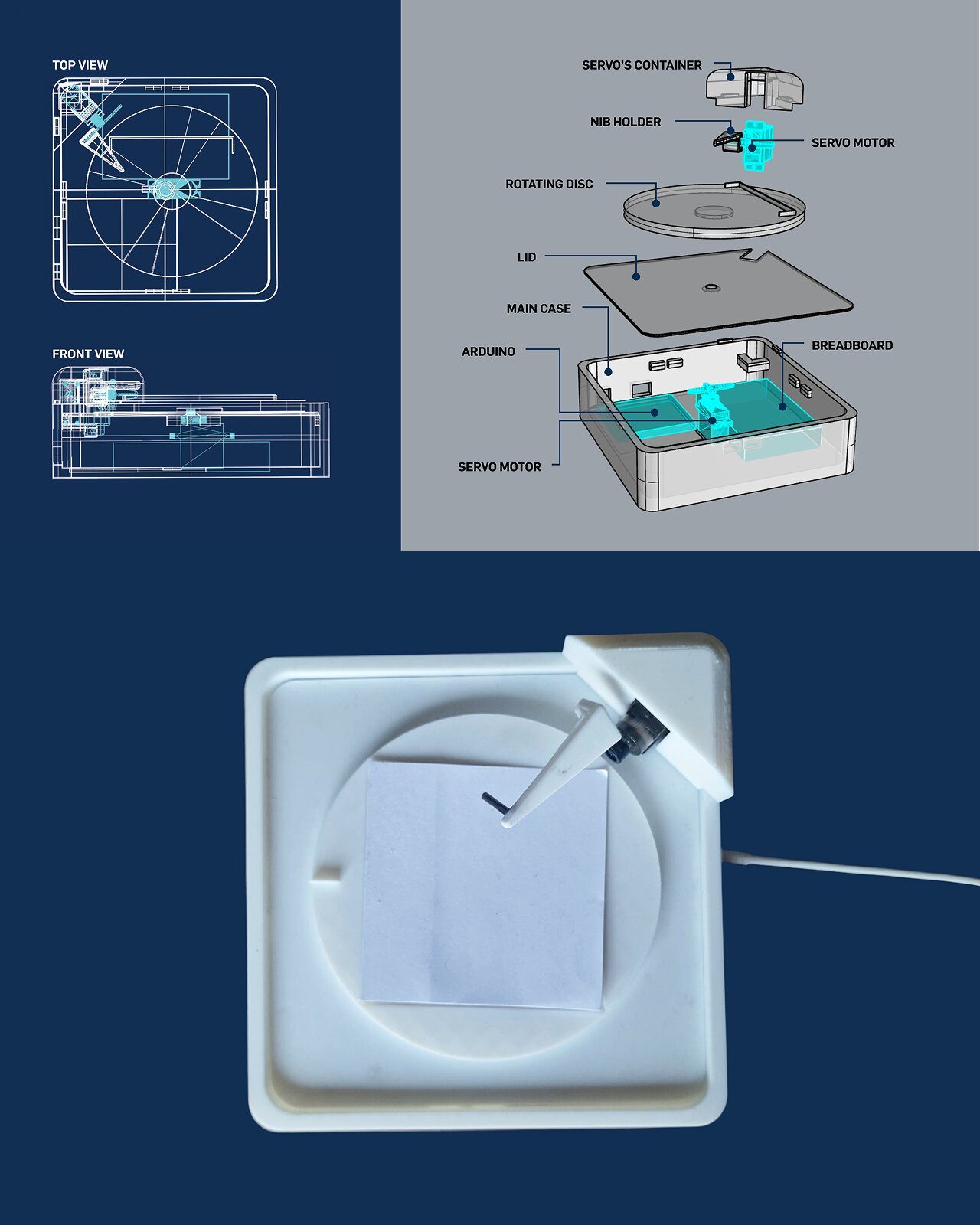
It was designed on Rhino, printed with PLA filament, and post-processed.
How It Works
Synchribble has two motors. One turns the disc to leave a mark on the sticky note, and the other makes the graphite nib oscillate to indicate the intensity of digital carbon footprint emissions.
Testing
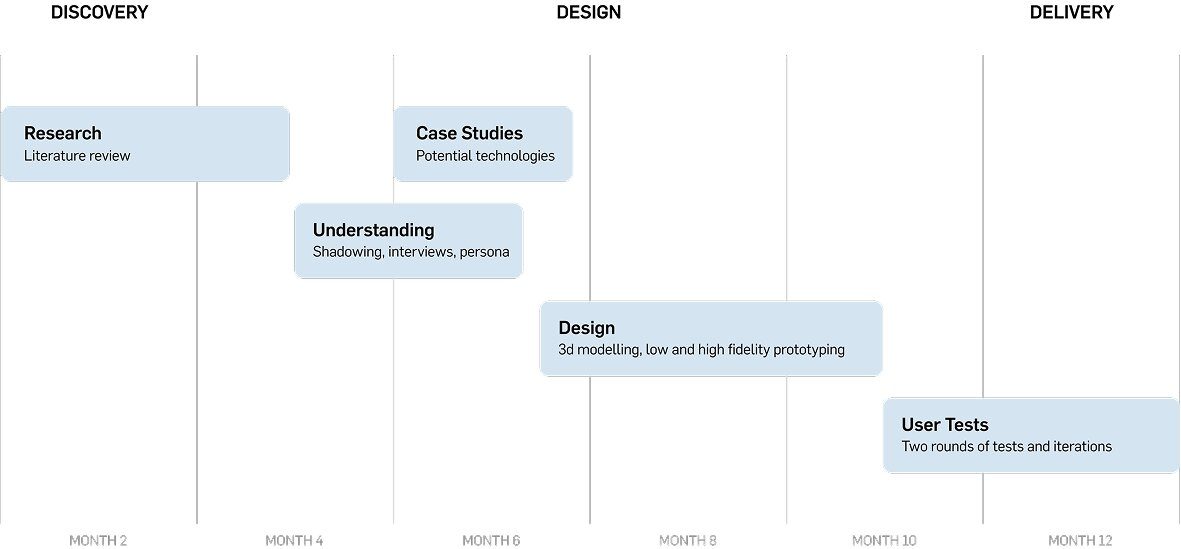
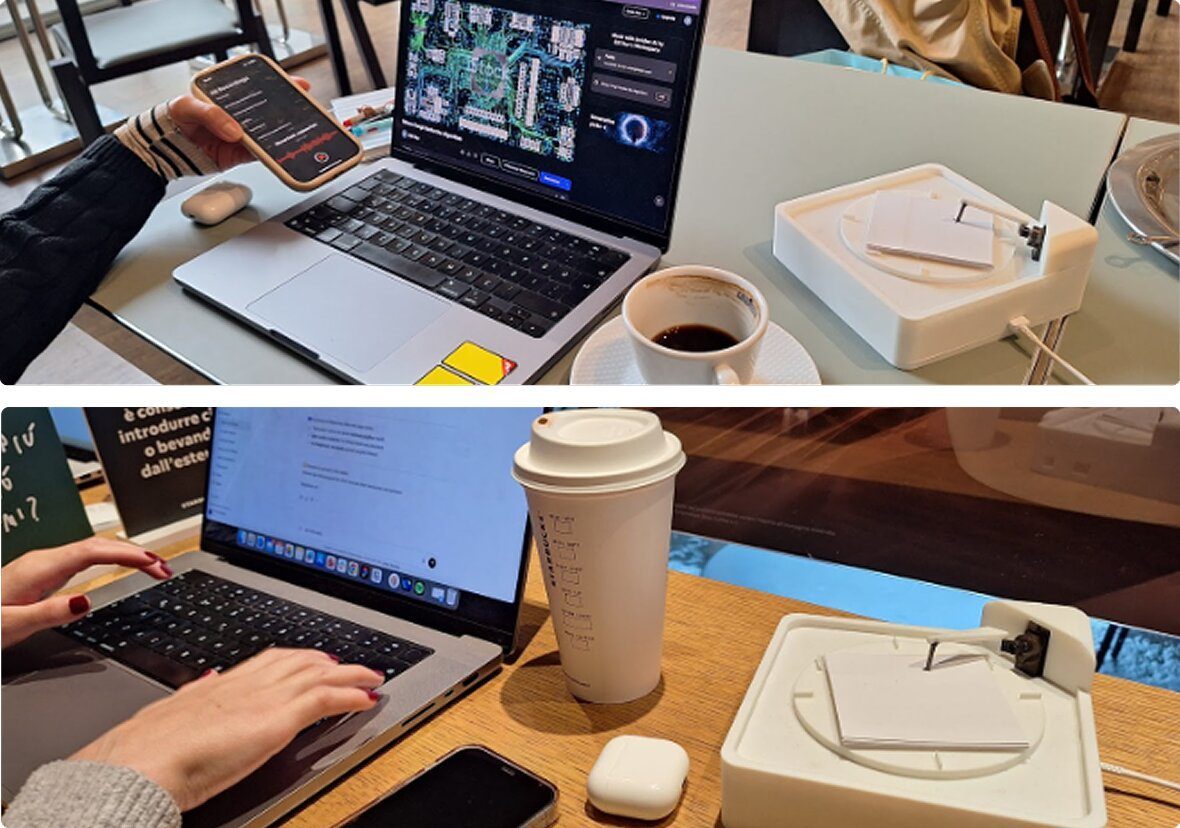
Two iterations were made based on the two rounds of testing conducted. The audio recordings were transcribed and then an affinity map was created to identify the emerging themes.
Findings
The findings indicate that participants found the concept effective for raising awareness of digital carbon footprints and this awareness evoked feelings of guilt and shared responsibility among users. Digital guilt was found to be highly context-dependent, often fading when activity is deemed "worthy" or necessary, yet participants believed communal tracking could bridge this gap and drive collective behavior change.